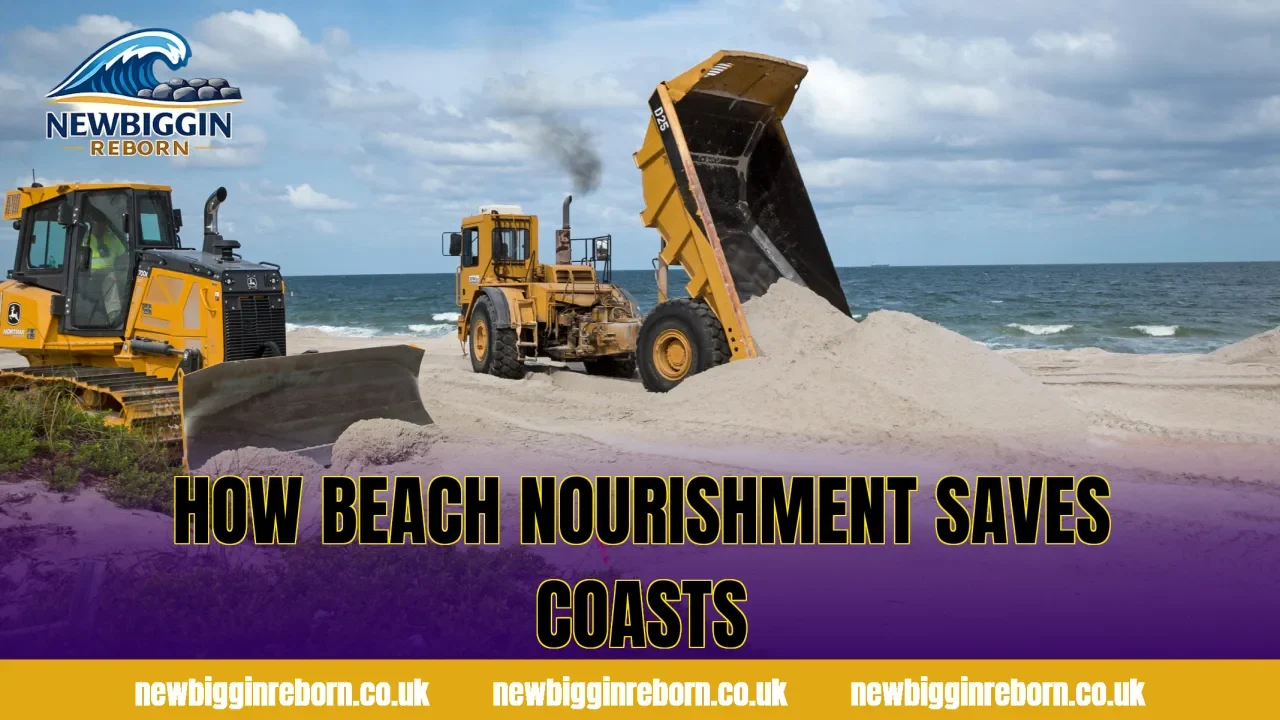
How does beach nourishment work is a question that coastal engineers, environmentalists, and local communities are asking more urgently than ever. As rising sea levels and intensifying storms erode shorelines at an alarming pace, beach nourishment has emerged as one of the most widely used coastal management strategies in the world. This method involves replenishing lost sand along a beach to restore its natural protective function. Understanding how does beach nourishment work helps explain why regions like Newbiggin-by-the-Sea have invested significantly in this approach to safeguard their coastlines for future generations.
How does beach nourishment work to protect shorelines
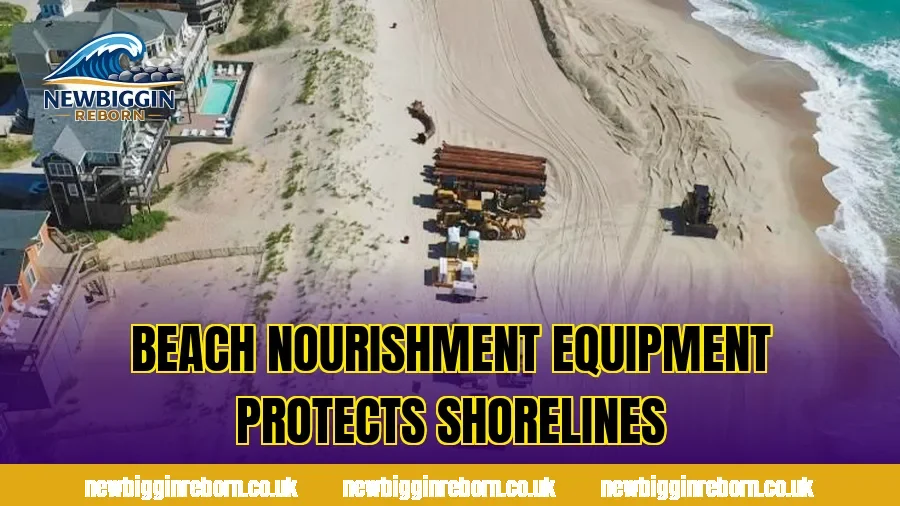
How does beach nourishment work this question sits at the heart of modern coastal engineering. When waves, tides, and storms strip sand away from a beach, the shoreline loses its first line of natural defense against flooding and erosion. Beach nourishment addresses this problem directly by adding compatible sand or sediment back onto the eroded beach, essentially rebuilding what the sea has taken. The process sounds straightforward, but behind it lies a highly technical sequence of assessments, material sourcing, and precision placement that determines whether the investment will last years or just months.
Coastal engineers begin by studying sediment budgets — essentially an accounting of how much sand enters and leaves a beach system over time. When losses consistently outpace gains, the shoreline retreats landward, threatening properties, infrastructure, and ecosystems. How does beach nourishment work in this context means intervening in that budget deficit by importing sediment from offshore deposits, riverbeds, or inland quarries and redepositing it in carefully calculated volumes along the shore. The goal is not just to make a beach look wider, but to restore hydrodynamic balance so the beach can continue absorbing wave energy naturally.
The source material matters enormously. Engineers match grain size, composition, and color as closely as possible to the native sand, because mismatched sediment migrates away quickly or disrupts local marine habitats. A well-designed nourishment project uses sediment that behaves like the original beach material, settling into a stable profile that mimics natural conditions. This compatibility is why extensive sediment sampling and laboratory analysis precede every major project before a single grain of new sand touches the shore.
The role of dredging in sand replenishment
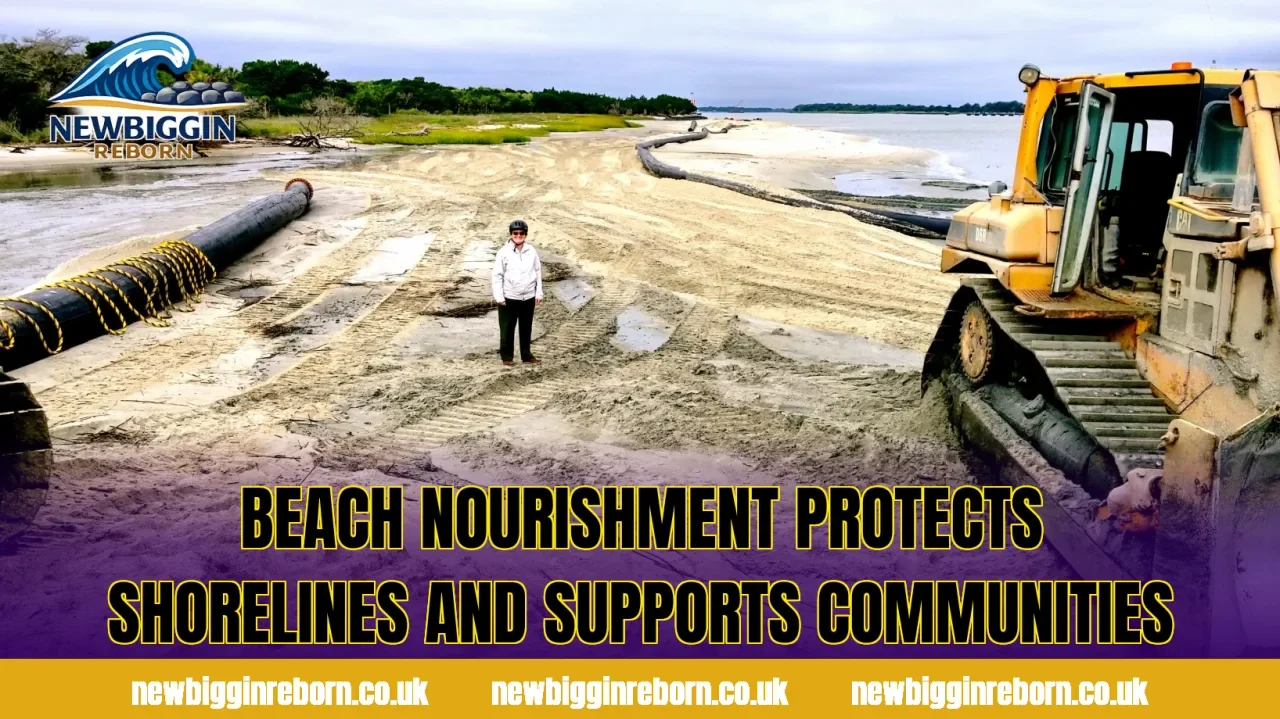
Dredging is the most common method used to extract and transport sediment for large-scale nourishment projects. Specialist vessels called trailing suction hopper dredgers vacuum sand from the seabed and pump it as a slurry through pipelines directly onto the beach. How does beach nourishment work with dredging depends on the proximity of the borrow site to the target beach — the closer the source, the more cost-effective and logistically manageable the operation becomes. Offshore borrow areas are carefully selected throughabed surveys to ensure sufficient volume without damaging sensitive marine environments.
Hydraulic pumping and beach profiling techniques
Once the slurry arrives onshore, bulldozers and graders shape the deposited sand into a designed beach profile — a precise cross-sectional shape engineered to dissipate wave energy effectively. The berm, the flat upper section of the beach, and the sloping foreshore are both graded to specific dimensions based on hydrodynamic modeling. Understanding how does beach nourishment work at this stage reveals the engineering precision involved: the beach profile must match the behavior of natural waves at that location, otherwise the sand will redistribute itself into an unstable shape and erode faster than expected.
Monitoring and long-term maintenance cycles
Beach nourishment is not a one-time fix — it requires ongoing monitoring and periodic top-ups as the beach naturally loses material to littoral drift and storm events. Engineers install survey benchmarks and conduct regular topographic and bathymetric surveys to track volumetric changes over time. How does beach nourishment work as a long-term strategy depends on establishing maintenance cycles that replenish sand before the beach erodes below its functional threshold, keeping coastal defenses intact without allowing the shoreline to retreat to its pre-intervention state.
How does beach nourishment work alongside hard structures
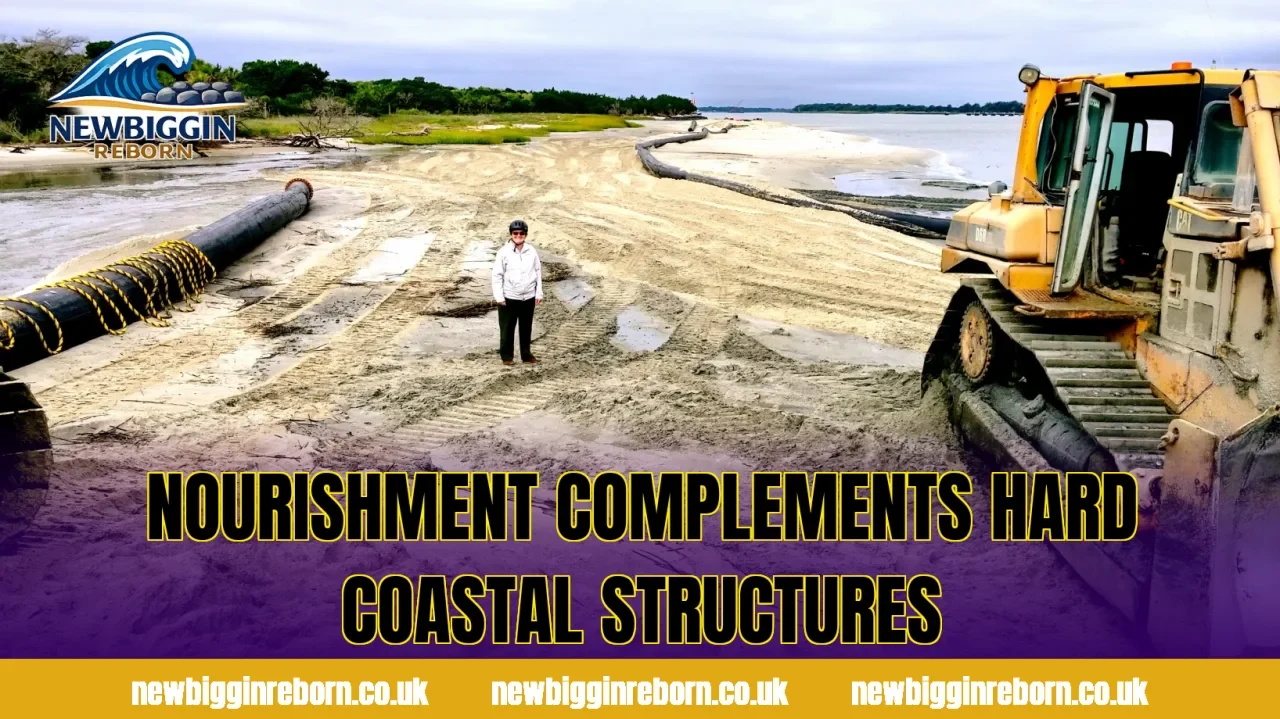
Beach nourishment rarely operates in isolation. In many coastal management schemes, it is combined with hard engineering structures such as groynes, breakwaters, and offshore reefs to maximize the lifespan and effectiveness of the added sand. Groynes, for instance, interrupt the longshore drift that carries sediment parallel to the shore, trapping nourished material within defined cells so it does not simply migrate away. This integrated approach transforms how does beach nourishment work from a temporary measure into a more durable coastal protection system.
The interaction between soft and hard defenses creates a dynamic coastal environment that engineers must model carefully. A breakwater reduces wave energy reaching the shore, allowing nourished sand to remain in place longer, while also creating sheltered conditions that support nearshore biodiversity. When these elements are designed together, the beach becomes a multifunctional asset — providing storm surge buffering, recreational space, and ecological habitat simultaneously. Projects that ignore this integration often find their nourishment campaigns underperforming because the structural context was not accounted for in the design.
Groyne fields and sediment cell management
Groyne fields divide the beach into discrete sediment cells, each of which retains a portion of the nourished material against the natural flow of longshore drift. Engineers calculate the spacing and height of groynes based on wave climate data and sediment transport modeling to optimize retention. How does beach nourishment work within groyne fields is essentially a story of containment — the structures create pockets where sand accumulates and stabilizes, extending the intervals between maintenance nourishment events and reducing the overall volume of sediment needed over time.
Offshore breakwaters and wave energy reduction
Offshore breakwaters positioned parallel to the shoreline create a shadow zone of reduced wave energy that allows the beach to build naturally through a process called tombolo formation. Sand accumulates in the low-energy zone behind the breakwater, effectivelyickening the beach without constant external input. When planners consider how does beach nourishment work in conjunction with these structures, the combined effect is significantly greater coastal resilience than either approach could achieve on its own, especially in high-energy wave environments exposed to dominant swell directions.
Dune restoration as a companion strategy
Behind the active beach, dune systems serve as a secondary line of defense, storing sand that can naturally feed back onto the beach during storm events. Restoring or constructing dunes as part of a nourishment scheme adds considerable resilience to the coastal system over time. Exploring how does beach nourishment work alongside dune restoration shows that the two strategies reinforce each other — a healthy dune acts as a sediment reservoir and wind barrier, while a well-nourished beach prevents the dune toe from being undermined by wave attack during high water events.
| Method | Primary function | Typical lifespan | Best suited for |
|---|---|---|---|
| Beach nourishment only | Volumetric replenishment | 3–7 years per cycle | Low-to-moderate energy coasts |
| Nourishment + groynes | Sediment retention and drift control | 7–15 years per cycle | Coasts with strong longshore drift |
| Nourishment + breakwater | Wave energy reduction and accretion | 10–20 years per cycle | High-energy exposed coastlines |
| Nourishment + dune restoration | Storm surge buffering and sand storage | 15–25 years with maintenance | Barrier islands and open beaches |
Environmental and economic impacts of nourishment projects
Understanding how does beach nourishment work from an environmental perspective requires balancing the protection it offers against its potential ecological impacts. Dredging disturbs seabed communities at the borrow site, temporarily increasing water turbidity and displacing benthic organisms. These impacts are generally considered recoverable within one to three years if borrow sites are chosen carefully and dredging intensity is managed within acceptable ecological thresholds. Environmental impact assessments are now a standard requirement before any major nourishment project receives regulatory approval.
On the economic side, beach nourishment represents a substantial but often cost-effective investment when weighed against the damages caused by coastal flooding and erosion. Studies consistently show that every dollar spent on beach nourishment delivers multiples of that value in protected property, tourism revenue, and avoided emergency response costs. The economics of how does beach nourishment work as a long-term strategy depend on factoring in climate change projections — as sea levels rise and storm frequency increases, maintenance intervals will shorten and sediment volumes will need to increase maintain the same level of protection.
Tourism revenue and recreational beach value
Wide, healthy beaches attract tourists and support local economies in ways that are difficult to quantify but deeply significant to coastal communities. A nourished beach extends the usable recreational season, supports water sports, hospitality businesses, and local employment, and enhances the quality of life for residents. Recognizing how does beach nourishment work as an economic driver as well as a coastal defense tool has shifted how many local governments frame these investments — not as infrastructure costs but as economic development expenditures with measurable returns.
Habitat creation and biodiversity outcomes
When nourishment projects are designed with ecological sensitivity, they can actually improve intertidal habitat by restoring a sandy foreshore that supports nesting shorebirds, invertebrates, and pioneer plant communities. The choice of sediment grain size directly influences which species can colonize the restored beach and how quickly the ecological community re-establishes after placement. Examining how does beach nourishment work from a biodiversity standpoint reveals that thoughtful project design can deliver conservation-benefits alongside coastal protection, making these schemes more defensible to environmental stakeholders and regulators.
Climate adaptation and future coastal planning
Beach nourishment is increasingly recognized as a key tool in climate adaptation strategies, offering flexibility that rigid hard defenses cannot provide. Unlike seawalls, a nourished beach can be updated in design and scale as sea-level rise projections evolve, making it an adaptive rather than fixed response. Projecting how does beach nourishment work under climate change scenarios requires dynamic modeling that accounts for increased storm surge frequencies, accelerated sea-level rise, and shifting sediment transport patterns driven by changing wave climates across coastal regions worldwide.
Conclusion
How does beach nourishment work is ultimately a question about resilience — restoring natural systems so they can continue protecting communities, ecosystems, and economies against the relentless force of the sea. From sediment sourcing and precision placement to integration with hard structures and long-term monitoring, every element of a nourishment project serves the same fundamental goal: keeping the shoreline stable and functional. For communities facing serious coastal erosion challenges, learning from projects designed with technical depth and environmental care offers a clear and practical path forward. Explore more about this approach through Newbiggin Reborn, a project dedicated to restoring and protecting one of England’s most historically significant coastal communities.
Xem thêm: Sand replenishment plan for Newbiggin Bay coastal works