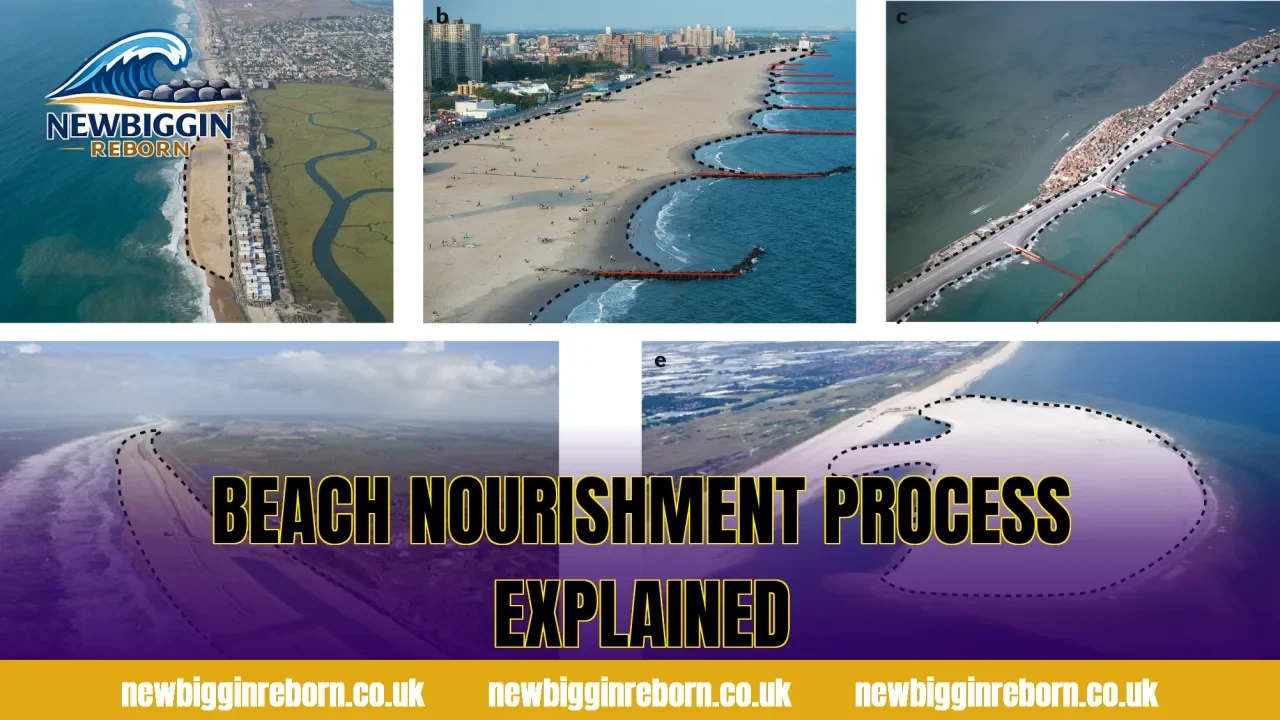
The nourishment process is one of the most effective coastal management strategies used to restore eroded shorelines and protect communities from rising sea levels. It involves adding large volumes of compatible sand or sediment to a depleted beach, rebuilding its natural profile and improving storm protection. This method is widely adopted across the UK and Europe, especially in areas where erosion threatens both ecosystems and infrastructure. Understanding how this process works — from sediment sourcing to long-term monitoring — helps communities make informed decisions about coastal resilience.
What the beach nourishment process really involves
The beach nourishment process is more technical than simply dumping sand along a shoreline. It requires detailed surveys, sediment compatibility testing, and precise hydraulic engineering to ensure the added material behaves correctly under wave action. Each stage of the operation is coordinated between environmental agencies, coastal engineers, and local authorities to minimise disruption and maximise long-term effectiveness.
How sediment sources are identified and assessed
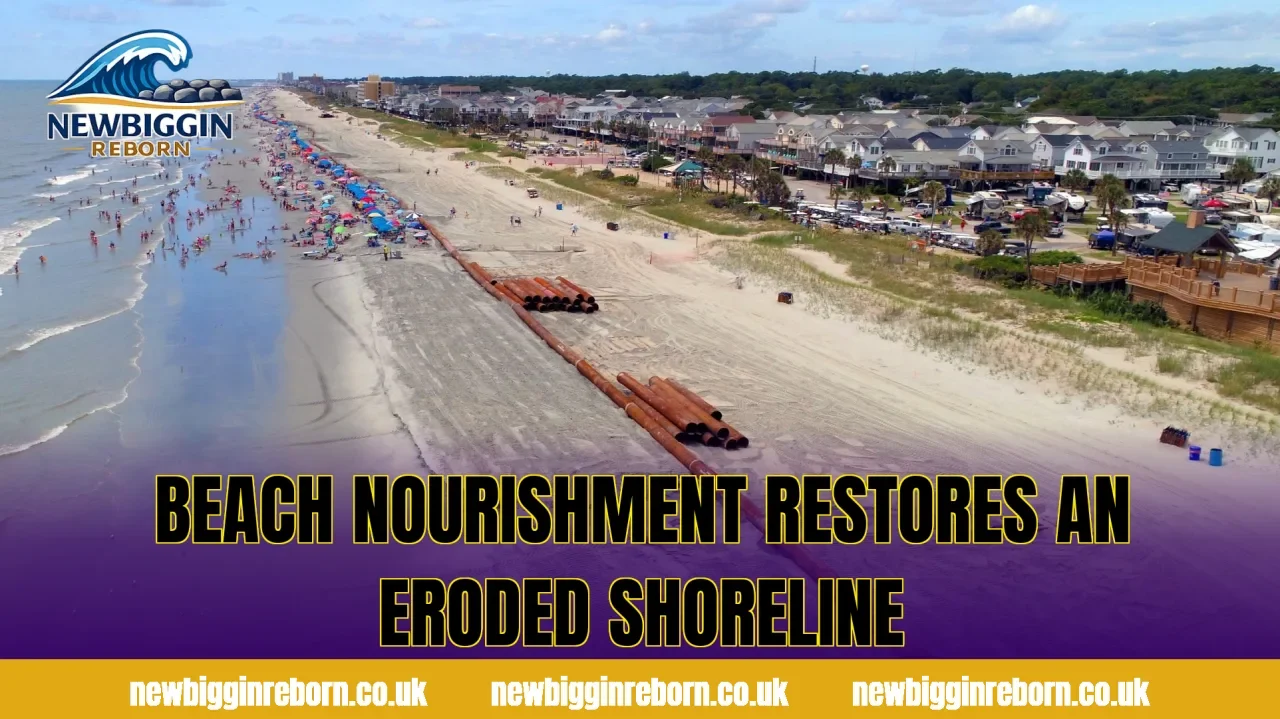
The beach nourishment process begins with identifying an appropriate sediment source, typically from offshore dredging sites or licensed land-based quarries. Engineers analyse grain size, colour, and mineralogy to ensure the new material closely matches the existing beach composition. Using incompatible sediment can result in rapid loss of material, habitat disruption, and poor recreational quality for coastal users.
The role of hydrodynamic surveys in planning
Before any sand is placed, coastal engineers conduct detailed hydrodynamic surveys to understand wave energy, tidal flows, and longshore drift patterns. These surveys determine how sediment will move once placed, identifying zones where material is most likely to remain stable over time. Without this data, even the most well-funded nourishment project risks losing its investment to natural sediment transport within just a few seasons.
Environmental impact assessments before placement
Every major beach nourishment process project requires a thorough environmental impact assessment before work begins on site. Ecologists evaluate potential effects on intertidal habitats, benthic communities, and nesting bird populations that depend on undisturbed shorelines. Mitigation measures such as seasonal work restrictions, turbidity monitoring, and habitat compensation schemes are routinely built into project plans to satisfy regulatory requirements.
Beach nourishment process: methods and equipment used
The actual execution of the beach nourishment process depends on the source location of the sediment and the scale of the project. Offshore dredging operations use specialist vessels to extract and transport sand, while nearshore pipelines deliver material directly onto target sections of beach. Understanding the equipment involved helps explain why nourishment schemes require significant investment and careful logistical planning.
Trailer suction hopper dredgers explained
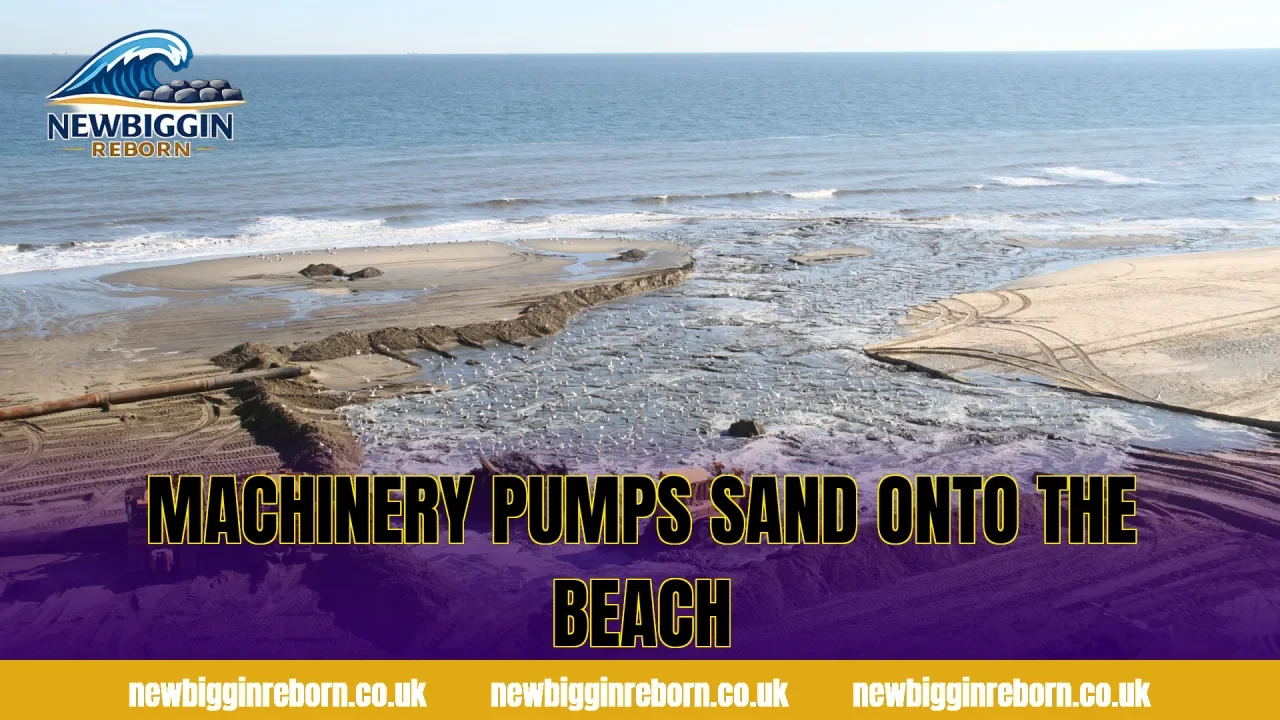
Trailer suction hopper dredgers are the most commonly used vessels in large-scale beach nourishment process operations across the UK coastline. These ships vacuum sediment from the seabed, store it in onboard hoppers, and then pump it ashore through floating or submerged pipelines. A single vessel can deliver tens of thousands of cubic metres of sand per day, making this method both efficient and cost-effective for large beach replenishment schemes.
Rainbow pumping and direct discharge techniques
Once the dredger is positioned offshore, the beach nourishment process continues through either rainbow pumping or direct pipeline discharge onto the beach face. Rainbow pumping projects a high-pressure arc of sand-water slurry from the vessel directly onto the shoreline, allowing rapid placement without the need for a fixed pipeline connection. Direct discharge, by contrast, delivers material with more precision but typically requires more setup time and a stable anchor position close to the shore.
Beach profiling and grading after placement
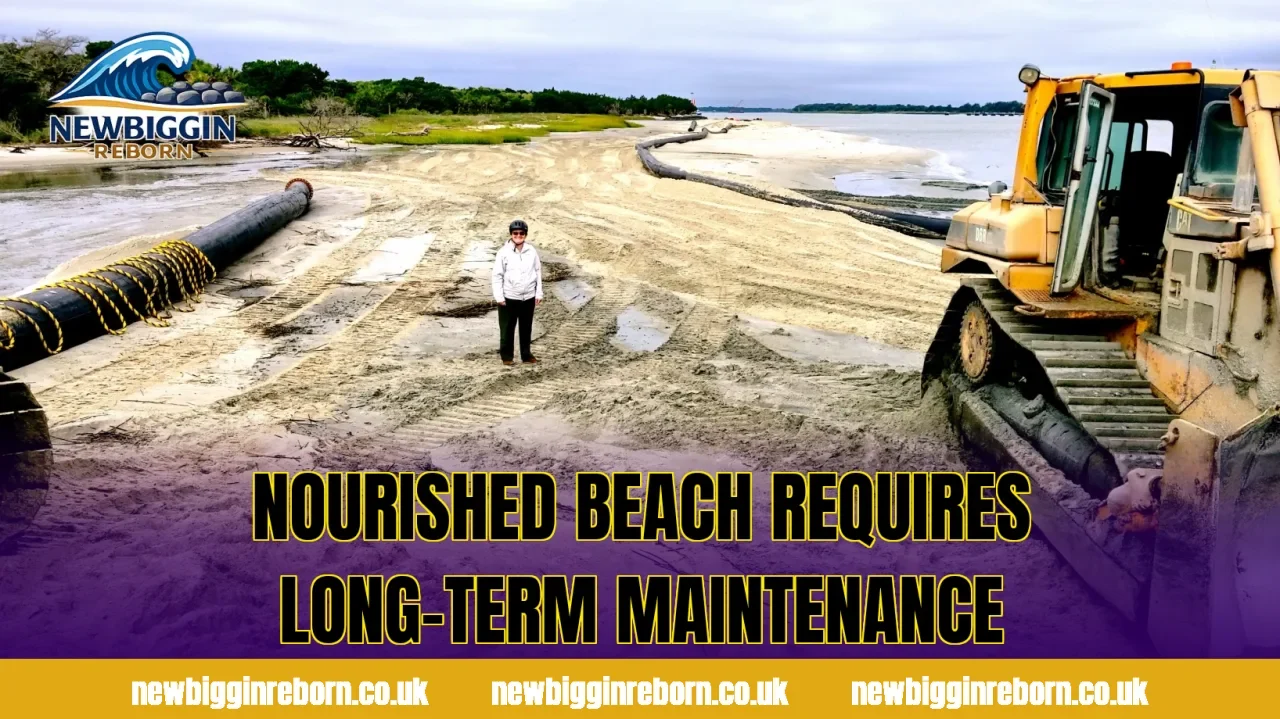
After sand has been delivered, specialist machinery including bulldozers and beach graders shape the deposited material into the correct cross-sectional profile. Engineers follow a pre-designed beach profile that optimises both wave energy dissipation and public usability, balancing recreational access with storm protection function. The completed beach nourishment process is then documented through post-works surveys, which form the baseline for future monitoring campaigns.
Long-term performance monitoring and maintenance cycles
A single nourishment event rarely provides permanent protection, which is why ongoing monitoring is built into every responsible coastal management programme. Regular volumetric surveys track how quickly the placed sediment migrates or erodes under seasonal wave conditions. This data informs the scheduling of future top-up campaigns, allowing budget planning and environmental assessments to run concurrently with maintenance cycles.
Sediment budget tracking over time
Coastal managers use sediment budget analysis to quantify inputs and outputs of material across a defined shoreline cell during each phase of the beach nourishment process. By comparing survey data from multiple time points, engineers can calculate annual loss rates and predict when the next nourishment intervention will be required. This proactive approach prevents the shoreline from falling below a critical threshold that would expose infrastructure or coastal habitats to unacceptable risk.
Wave and storm impact on nourished beaches
Severe storms can remove significant volumes of placed sediment in a matter of hours, temporarily exposing the underlying beach structure and reducing the level of coastal protection. The beach nourishment process accounts for this variability by designing beach profiles with sufficient volume to absorb storm losses while still maintaining an adequate protective berm above normal high-water mark. Post-storm surveys are conducted promptly so that emergency top-ups can be mobilised if the residual beach volume falls below the agreed trigger level.
Community engagement and stakeholder communication
Successful delivery of a beach nourishment process scheme depends as much on community support as it does on engineering precision. Local residents, businesses, and environmental groups are consulted throughout the planning phase to ensure that concerns about noise, dust, access disruption, and ecological impact are addressed early. Transparent communication about the purpose, timeline, and expected outcomes of nourishment works builds trust and helps sustain public support for long-term coastal management investment.
| Stage | Key activity | Typical duration | Primary stakeholders |
|---|---|---|---|
| Feasibility study | Sediment source identification, coastal surveys | 6–12 months | Coastal engineers, environmental agencies |
| Environmental assessment | Habitat surveys, impact mitigation planning | 3–9 months | Ecologists, planning authorities |
| Consenting and licensing | Marine licence applications, public consultation | 6–18 months | Regulators, local communities |
| Construction phase | Dredging, pipeline placement, beach profiling | 4–16 weeks | Contractors, port authorities |
| Post-works monitoring | Volumetric surveys, sediment sampling | Ongoing (annual) | Coastal managers, researchers |
Conclusion
Beach nourishment process planning, execution, and monitoring form a continuous cycle that keeps vulnerable coastlines resilient against erosion and climate-driven sea level rise. Each phase — from sediment sourcing to community engagement — plays a critical role in determining whether a scheme delivers lasting protection or requires costly early intervention. For communities like Newbiggin-by-the-Sea, this process has been transformative, and Newbiggin Reborn continues to champion evidence-based coastal care that balances ecological sensitivity with long-term shoreline stability.
Read more: Beach management guide for Newbiggin coastal care today