About Newbiggin Reborn explains how engineering, heritage, tourism, and community action transformed a vulnerable seaside town. The Newbiggin Reborn vision restores the shoreline while strengthening cultural identity and visitor confidence. Its wider purpose is turning physical protection into lasting economic and social value.
Overview of About Newbiggin Reborn and its purpose
The programme began because Newbiggin needed more than cosmetic seafront improvement. Falling beach levels threatened sea walls, property, recreation, and visitor confidence. Investment therefore combined coastal protection with public-space renewal and cultural placemaking. That joined approach created a foundation for later tourism and community planning.

Historical conditions behind the town’s renewal
Newbiggin was a recognised resort by 1828 and relied on fishing, trade, and mining. Yet beach erosion had continued since the 1920s. Central levels fell about 0.2 metres yearly, while mining subsidence lowered parts of the bay. About Newbiggin Reborn connects current renewal with those deeper environmental and economic shifts.
Strategic vision behind About Newbiggin Reborn
The vision is a protected, connected town where residents benefit directly. Engineering secures the bay, while enterprise, heritage, access, and events widen opportunity. New projects should respect local character instead of producing a generic resort. Maintenance, participation, and transparent measurement must guide every later investment.
Economic and social goals for lasting progress
Economic goals include stronger trading, longer stays, and more off-season activity. Social priorities cover safe spaces, accessible recreation, youth participation, and heritage learning. The Maritime Centre, promenade, beach, lifeboat history, and art already form a visitor network. Employment, vacancy, footfall, satisfaction, and participation should measure progress.
Coastal engineering and infrastructure solutions
The coastal intervention gave the wider project a credible physical foundation. About Newbiggin Reborn rests on major works completed between April and November 2007. The scheme combined imported sand, a detached breakwater, heavy armour, and promenade improvements. Together, these measures reduced risk while improving the bay’s usefulness and appearance.
Rebuilding and replenishing the beach
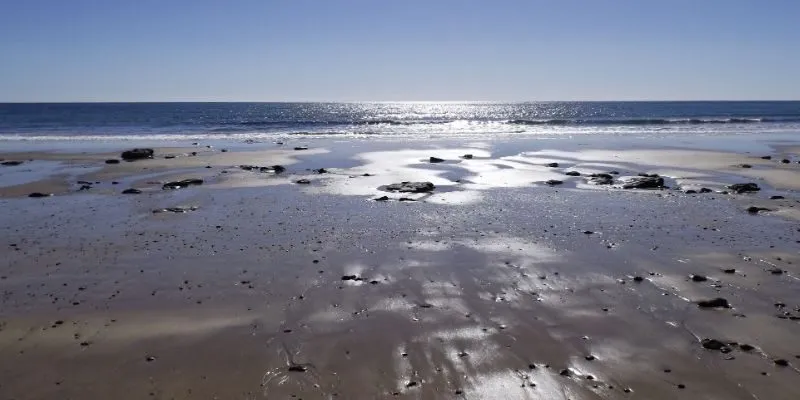
The project placed about 500,000 tonnes of new sand along Newbiggin Bay. This equalled roughly 300,000 cubic metres of beach recharge. Sand came from near Skegness through a pipeline extending about 1.5 kilometres. The wider beach now absorbs waves while supporting walking, leisure, and events.
Constructing the offshore breakwater
A detached breakwater roughly 200 metres long retained the imported material. Construction used around 60,000 tonnes of rock and concrete armour. Interlocking Coreloc units reduced wave energy, while steel piles supported the sculpture. Without this structure, much replenished sand could have moved away.
Controlling erosion and protecting nature
The bay lies within nationally and internationally important coastal designations. Engineers considered bird-feeding areas, geology, sediments, and construction disturbance. Long-term management should monitor beach profiles, armour, storms, habitats, and access. Annual inspection remains essential because coastal systems continue changing.
Rebuilding the economy and stimulating tourism
A safer beach created possibilities, but engineering alone could not restore prosperity. About Newbiggin Reborn connects the seafront with culture, food, wildlife, and local business. The Maritime Centre offers museum spaces, activities, venue facilities, and a 65-seat café. These services encourage longer visits while supporting residents throughout the year.

Positioning a renewed coastal destination
Newbiggin can promote its bay, promenade, wildlife, heritage, and public art together. About Newbiggin Reborn should favour clear itineraries over disconnected attractions. Visitors can combine the Maritime Centre, church, lifeboat history, shops, and coastal walks. Better signs and digital information would make that journey easier.
Developing resilient local businesses
Independent cafés, accommodation, shops, guides, and makers benefit from longer visits. Support may include grants, shared promotion, pop-ups, mentoring, and coordinated hours. Local procurement for events and maintenance keeps spending within the town. Winter programmes would also reduce dependence on short summer peaks.
Attracting responsible outside investment
External investment should complement local enterprise instead of displacing it. Proposals need tests covering jobs, design, accessibility, resilience, and community benefit. Smaller reuse, hospitality, workspace, and leisure projects may deliver steadier returns. Public reporting should compare promised outputs with actual delivery.
Art, heritage, and cultural identity
Art transformed a defensive structure into a recognisable coastal image. About Newbiggin Reborn shows how engineering can carry cultural meaning. Sean Henry’s Couple features two five-metre bronze figures about 300 metres offshore. Installed in 2007, it became the United Kingdom’s first permanent offshore sculpture.
Culture gave the bay a human symbol
The Couple as an offshore landmark
The figures change visually with tide, weather, light, and distance. Their ordinary clothing invites personal interpretations from residents and visitors. About Newbiggin Reborn links this artwork directly with the protected shoreline. A smaller land-based version allows closer viewing from the promenade.
Protecting historic buildings and maritime memory
Renewal gains depth when new attractions reveal older heritage. St Bartholomew’s Church, the lifeboat station, fishing cobles, archives, and mining stories explain local development. The Maritime Centre supports interpretation through displays, education, events, and outreach. Future conservation should combine building care with oral history and digital records.
Reawakening pride across the community
Community pride grows through safer spaces, active facilities, and meaningful symbols. Construction initially faced scepticism, so teams provided information and a public viewing platform. That experience proved communication must continue beyond the building phase. Residents should shape events, maintenance, interpretation, and future funding priorities.
Evaluating the regeneration’s effectiveness
The scheme delivered a restored beach, breakwater, promenade improvements, and distinctive sculpture. About Newbiggin Reborn gained recognition through a Civil Engineering Award in 2008. A government appraisal estimated approximately £40.8 million in present-value protection benefits. That figure represents assessed value, not direct local cash income.
Positive economic changes and measurable value
The improved shoreline protects property while supporting recreation and commercial confidence. The Maritime Centre and sculpture strengthened the bay’s destination identity. However, no single public dataset proves every claimed economic outcome. Annual reporting should cover footfall, vacancies, jobs, stays, confidence, and event spending.
Responses from residents and visitors
Project records describe early concern during dredging and stronger confidence afterward. Tourism sources now highlight the beach, Couple, wildlife, accessibility, promenade, and Maritime Centre. These signals are useful but cannot replace representative surveys. Feedback should include traders, young residents, disabled users, fishers, and heritage groups.
Maintaining sustainable value over time
Future stewardship must address stronger storms, changing sediments, ageing infrastructure, and commercial pressure. About Newbiggin Reborn should support inspections, habitat monitoring, heritage care, and public dashboards. Tourism must improve local wellbeing instead of chasing unlimited visitor volume. Cooperation among residents, councils, businesses, engineers, and cultural groups will determine resilience.
Conclusion
About Newbiggin Reborn shows how coastal protection can become broader civic renewal. The £10 million scheme restored the beach, strengthened the bay, improved public space, and created a landmark. Its future depends on maintenance, local enterprise, credible measurement, and meaningful community influence. Newbiggin Reborn now depends on consistent maintenance, responsible investment, transparent evaluation, and meaningful resident participation.