

Coastal landscaping gives Newbiggin Reborn a practical design language for linking beach protection, public comfort, ecology, and visual identity. The shoreline needs planting, surfaces, drainage, lighting, and landform choices that can survive salt spray, wind, sand movement, and heavy footfall. Newbiggin already has a restored bay, a promenade setting, and visitor interest around the Maritime Centre and offshore artwork.
Planning Principles For Coastal landscaping In Shoreline Design
The coastal landscape should be planned around exposure, maintenance, public movement, and long term environmental value. Newbiggin’s seafront faces salt air, strong wind, seasonal rain, and shifting sand, so ordinary urban planting will not perform reliably. The first design stage should map wind corridors, wet areas, dry edges, seating demand, access routes, and view lines across at least ten priority points. This evidence allows designers to protect the bay’s character while avoiding fragile decorative features that fail after one winter.

Microclimate Analysis For Coastal landscaping
Microclimate analysis should measure salt spray, wind speed, sun exposure, shade patterns, and moisture levels before planting begins. Exposed paths near the bay may need wind filtering, while sheltered pockets can support seating and softer planting. Designers should also record where sand gathers after storms because repeated build up can block drains and damage surfaces. These observations keep the scheme practical rather than relying on attractive drawings without field evidence.
Native Salt Tolerant Planting With Deep Roots
Plant selection should favour native or locally suitable species that tolerate salt, drought, poor soils, and strong wind. Deep rooting grasses, hardy coastal perennials, and low shrubs can help hold sandy edges while keeping views open. Coastal landscaping should test planting in small pilot strips before expanding across larger areas. A realistic target is 70 percent plant survival after the first winter, followed by replacement only where evidence shows the design remains viable.
Soil Improvement For Poor Sandy Ground
Sandy coastal ground often drains quickly, holds limited nutrients, and can become unstable under heavy public use. Soil improvement should use suitable organic matter, mineral amendments, erosion matting, and controlled compaction where surveys support those methods. The design must avoid overfertilising because nutrient runoff can harm nearby coastal ecology. Maintenance teams should check soil depth and moisture twice yearly during the establishment period.
Terraced Landforms And Artificial Dune Strips
Terraced forms can reduce wind exposure, guide movement, and create small gathering areas without blocking the sea. Artificial dune strips may help trap sand and soften the transition between hard promenade and beach edge. Coastal landscaping should keep landforms low enough to protect views while still creating shelter for plants and people. Each new mound or terrace needs drainage checks because trapped water can damage paths during heavy rain.
Smart Irrigation Against Salt Accumulation
Irrigation should support young planting without wasting water or increasing salt concentration in the soil. Drip systems, moisture sensors, and timed watering can help plants establish during dry or windy periods. Designers should include flush cycles where salt build up becomes a risk around beds close to spray zones. The system must remain easy to isolate and repair because hidden leaks can undermine paths and planting beds.
Material Protection And Landscape Structure Solutions
Landscape structure must withstand corrosion, moisture, sand abrasion, vandalism, and storm exposure. The best coastal design uses durable materials, simple detailing, accessible repairs, and maintenance budgets confirmed before installation. Coastal landscaping should treat benches, screens, edging, lights, drains, and railings as one coordinated system instead of separate purchases. This reduces visual clutter and helps the seafront age more gracefully.
Corrosion Resistant Materials For Coastal landscaping
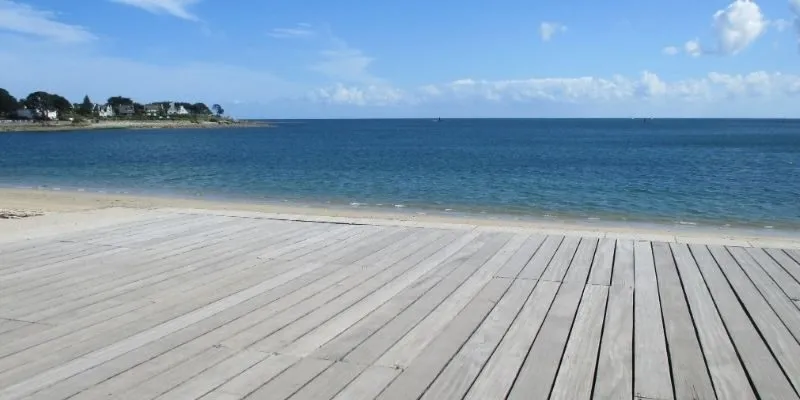
Materials should be chosen for salt resistance, repair access, slip performance, and whole life cost. Marine grade metals, treated timber, recycled composites, dense stone, and suitable concrete can all be useful when specified correctly. Coastal landscaping should avoid finishes that look premium at opening but corrode, stain, or splinter quickly. Inspection records should track rust, loose fixings, surface wear, staining, and replacement frequency.
Storm Screens Protecting Planting Areas
Wind screens can protect young planting, seating pockets, and informal gathering areas during exposed conditions. They should be porous enough to slow wind without creating sudden turbulence behind them. Low walls, timber slats, planted edges, and sculptural screens can all perform this role when placed carefully. Designs should preserve sea views because the coast’s openness remains central to local identity.
Surface Drainage Against Saline Flooding
Drainage must handle rain, spray, sand, and occasional high water without creating slippery or flooded public routes. Channels, gullies, permeable strips, and inspection chambers should be mapped before new paving or planting is installed. The plan should include pre winter drain clearing and post storm inspections as routine tasks. Public records can show residents that maintenance is planned, not reactive.
Safe Lighting In Humid Coastal Conditions
Lighting must resist moisture, salt, impact, and glare while helping people feel safe after dark. Sealed fittings, corrosion resistant columns, focused beams, and warm colour temperatures can improve comfort without overwhelming the bay. Smart controls may dim quiet areas while keeping ramps, crossings, and seating zones visible. Maintenance targets should include outage reporting, cleaning intervals, and inspection of exposed electrical housings.
Sustainable Ecological Trends In Coastal landscaping
Future coastal design should combine resilience with habitat value, not just harder surfaces and ornamental planting. Coastal landscaping can support pollinators, improve rainwater handling, soften promenade edges, and create learning points linked to the Maritime Centre. The approach should use low maintenance planting, recycled materials, accessible paths, and monitoring that shows whether ecological claims are true. Suggested targets include a 10 percent increase in planted public areas, two ecological reviews yearly, and six fixed photo points for public reporting.

The wider value comes from helping residents and visitors experience the coast as a cared for landscape. Better planting, cleaner drainage, safer lighting, wind shelter, and durable materials can increase dwell time while reducing repair costs. The design should also support schools, volunteers, guided walks, and seasonal events without damaging sensitive areas. When ecology, comfort, and maintenance work together, the shoreline becomes more than scenery and starts functioning as civic infrastructure.
Conclusion
Coastal landscaping gives Newbiggin Reborn a grounded method for shaping a shoreline that is attractive, resilient, inclusive, and easier to maintain. The strongest Promenade Improvements plan should start with climate evidence, then match planting, soil, materials, drainage, shelter, and lighting to real coastal conditions. Success must be measured through survival rates, inspection records, public feedback, ecological checks, and visible maintenance rather than opening day photographs.