
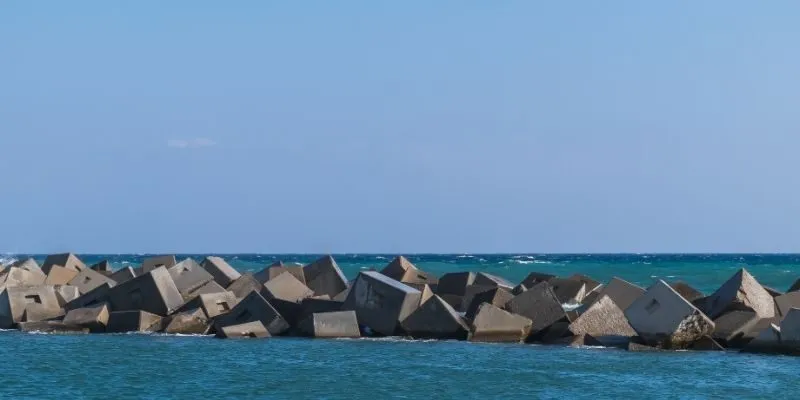
Offshore breakwater planning gives Newbiggin Reborn a protective marine structure that reduces wave force before it reaches the restored bay. The system supports beach retention, safer public space, and long term confidence for residents, traders, and visitors. Newbiggin’s earlier coastal works showed how an offshore defence could work with sand recharge instead of replacing it. The structure therefore becomes a technical anchor for shoreline stability, public access, and storm readiness.
Building The Offshore breakwater Solution At Newbiggin
The solution starts offshore because the strongest wave energy must be managed before it attacks the inner beach and sea walls. Records from Newbiggin Bay describe geotextile fabric, rock core placement, Coreloc concrete armour, and a five tonne rock armour toe. Around 60,000 tonnes of rock and concrete armour were used before 300,000 cubic metres of beach recharge was pumped ashore.
Concept And Wave Reduction In Offshore breakwater Design
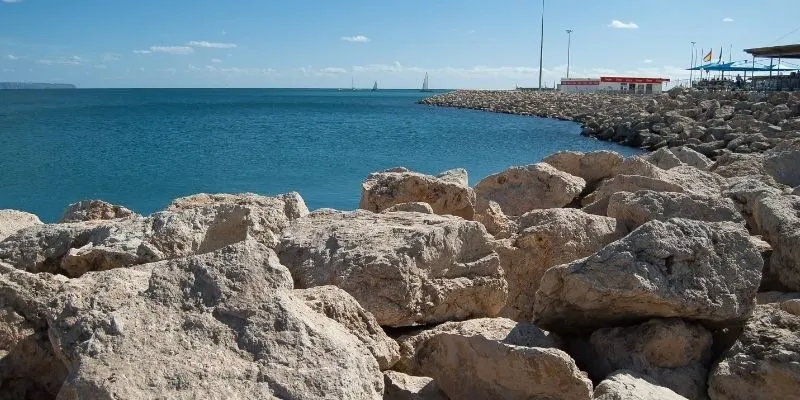
A detached structure works by breaking, refracting, and reducing wave energy before it reaches the shoreline. The sheltered zone behind it allows sediment to settle more reliably than an open coast would permit. Engineers must consider crest level, armour slope, toe depth, storm return periods, and the direction of dominant waves. The aim is not to stop the sea completely, but to lower destructive force enough for the beach and inner defences to function together.
Seabed Level Surveys And Optimal Distance
Before placement, survey teams need seabed levels, sediment strength, scour risk, tidal range, and construction access information. The structure must sit far enough offshore to reduce wave energy, yet close enough to influence sand behaviour inside the bay. Too near the shore, it may damage views and compress public space; too far away, its calming effect may weaken. The survey stage should also check navigation routes, fishing use, and maintenance access for later inspections.
Stone Armour And Specialist Concrete Units
Material choice determines whether the structure can survive repeated storm loading. Newbiggin’s project used rock core, concrete armour units measuring 3.9 cubic metres, and a five tonne rock armour toe. The Offshore breakwater body also incorporated foundations for the Couple sculpture, which added engineering and cultural complexity. Quality checks should confirm unit size, placement accuracy, interlock, toe stability, and resistance to movement during severe weather.
Marine Placement From Working Barges
Offshore placement requires marine plant, supply barges, lifting equipment, survey controls, and accurate positioning under tide windows. Crews must place lighter foundation layers before larger armour elements because each layer depends on the stability beneath it. The Offshore breakwater cannot be built like a land wall because waves, visibility, vessel movement, and seabed variation affect every lift. Daily records should capture quantities placed, weather stoppages, inspection results, and any movement from the planned alignment.
Navigation Lights And Buoy Safety Systems
Marine safety must protect fishing boats, leisure craft, contractors, and harbour users during construction and operation. Temporary buoys, exclusion zones, notices to mariners, radio communication, and visible lighting help reduce collision risk. After completion, permanent warning markers may be needed if the structure affects normal vessel movement or night visibility. Public updates should explain working areas clearly so beach users and boat operators understand the same safety message.
Technical Performance And Shoreline Shape Effects
The structure’s value depends on how it changes water movement and sand behaviour across multiple seasons. Newbiggin’s defence was designed to retain imported material while reducing pressure on the shore. Performance should be judged through beach profiles, armour inspections, scour checks, current measurements, and post storm reviews. The Offshore breakwater also needs ecological observation because rock surfaces can support new marine life while altering nearby sediment patterns.
Calm Water Formation And Natural Sand Build Up
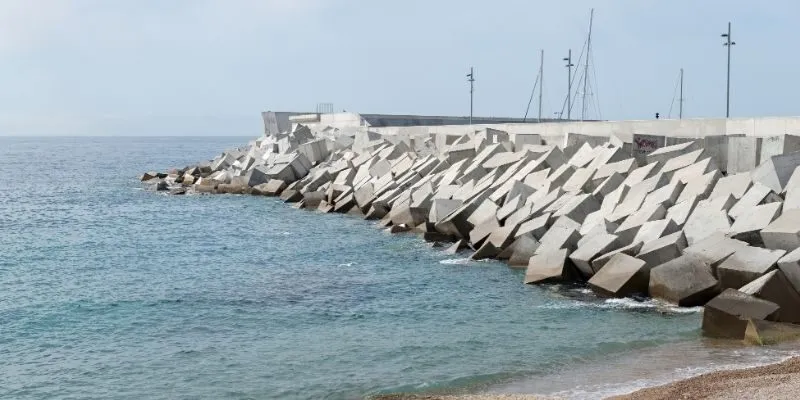
A calmer lee zone can encourage sand to remain behind the structure instead of being removed quickly by open wave action. This effect supports beach recharge and helps create a wider recreational surface for residents and visitors. The system works best when sand placement, wave reduction, and profile grading are planned together. Monitoring should identify where material builds naturally and where erosion still concentrates near structure ends.
Current Change After Offshore Protection
Every marine defence changes local flow, even when the outcome is beneficial overall. Currents may slow inside the bay, accelerate near structure tips, or shift deposition into new pockets. The Offshore breakwater should therefore be assessed with repeated surveys rather than one early inspection. Managers need to know whether current changes protect the beach, expose unexpected zones, or require small corrective works.
Post Storm Maintenance Of Rock Structure
Storms can move armour units, expose toe material, create scour holes, or shift sediment against one side of the structure. A practical maintenance plan should require inspections within 48 hours after major events and formal condition reports twice each year. Divers, drones, fixed photographs, and bathymetric checks can all support evidence based decisions. Repair work should be prioritised before small displacement becomes a structural weakness.
Reef Growth And Marine Life Monitoring
Hard surfaces placed in the sea often become settlement areas for algae, shellfish, small invertebrates, and fish. That ecological change can add value, but it should be measured rather than assumed. The Offshore breakwater should be monitored for colonisation, water quality, invasive species risk, and any effect on nearby intertidal habitats. Balanced reporting helps the town understand both engineering benefit and environmental responsibility.
Role Of Offshore Defence In Protecting Inland Infrastructure
Offshore defence protects inland assets by reducing the force that reaches the beach, promenade, access points, drainage, and sea walls. Newbiggin’s scheme linked the structure with major beach recharge, showing that hard and soft measures can support each other. Without wave reduction, imported sand would face stronger losses and inner defences could receive greater impact during storms. The Offshore breakwater therefore acts as part of a layered risk management system, not a single isolated barrier.

The inland value should be measured through repair costs, storm closures, access damage, overtopping records, and beach level retention. Suggested targets include two public condition updates each year, profile surveys after severe seasons, and rapid inspections after high energy storms. The Offshore breakwater can also support tourism because a more stable bay improves walking, photography, events, and confidence around local businesses.
Conclusion
Offshore breakwater strategy gives Newbiggin Reborn a durable way to reduce wave energy, retain sand, protect inland assets, and support a more confident public shoreline. The Newbiggin example shows why geotextile, rock core, concrete armour, navigation planning, and storm inspections must work as one managed system. Future Breakwater Construction resilience will depend on maintenance, current monitoring, habitat checks, transparent reporting, and timely repair after severe weather.